Partner Events
| DATE | AM | PM | EVENING | |||
| 17 June
(Wed) |
PE10: LUOW Inauguration (LUOW) 9.00am – 10.30am |
PE11: Financing Urban Water Playbook by WBG SWC & SEAPAW (WBG SWC & SEAPAW) 11.00AM – 12.30PM |
PE12: From Technology to Transaction: Developing Investable Water Projects (Xylem, Water Connect and Water Equity) 12.30PM - 2.00PM |
PE13: Financing Water-Related Climate Change Adaptation (Deltares & IPCC) 2.00PM – 3.30PM |
PE15: The Netherlands and Southeast Asia: (Re)thinking Nature Based Solutions (Embassy of the Kingdom of the Netherlands, the Netherlands Enterprise Agency and the Singapore-Netherlands Waterhouse of Dutchcham) 4.00PM - 6.00PM |
PE17: Emerald Ventures Riverside Cocktail Reception* (Emerald) 6.00PM - 8.00PM |
|
PE14: White Paper Presentation on Sustainable Water Certificates (SWC) (AWS) 2.00PM – 3.30PM |
P24: From Data to Decisions: Scaling Digital Resilience for Coastal and Urban Systems (ADB) 4.00PM – 5.30PM |
PE18: SUEZ Water Executives Networking Gala* (SUEZ) 7.00PM – 10.00PM |
||||
|
PE25: Urban Water Resilience as an Asset Class (RSK) 2.00PM – 3.30PM |
PE16: Jacobs Reception* (Jacobs) 5.30PM – 7.00PM |
|||||
Click here for full programme, session and speaker details.
World Cities Summit 2026
14 – 16 June 2026
Suntec Singapore Convention & Exhibition Centre
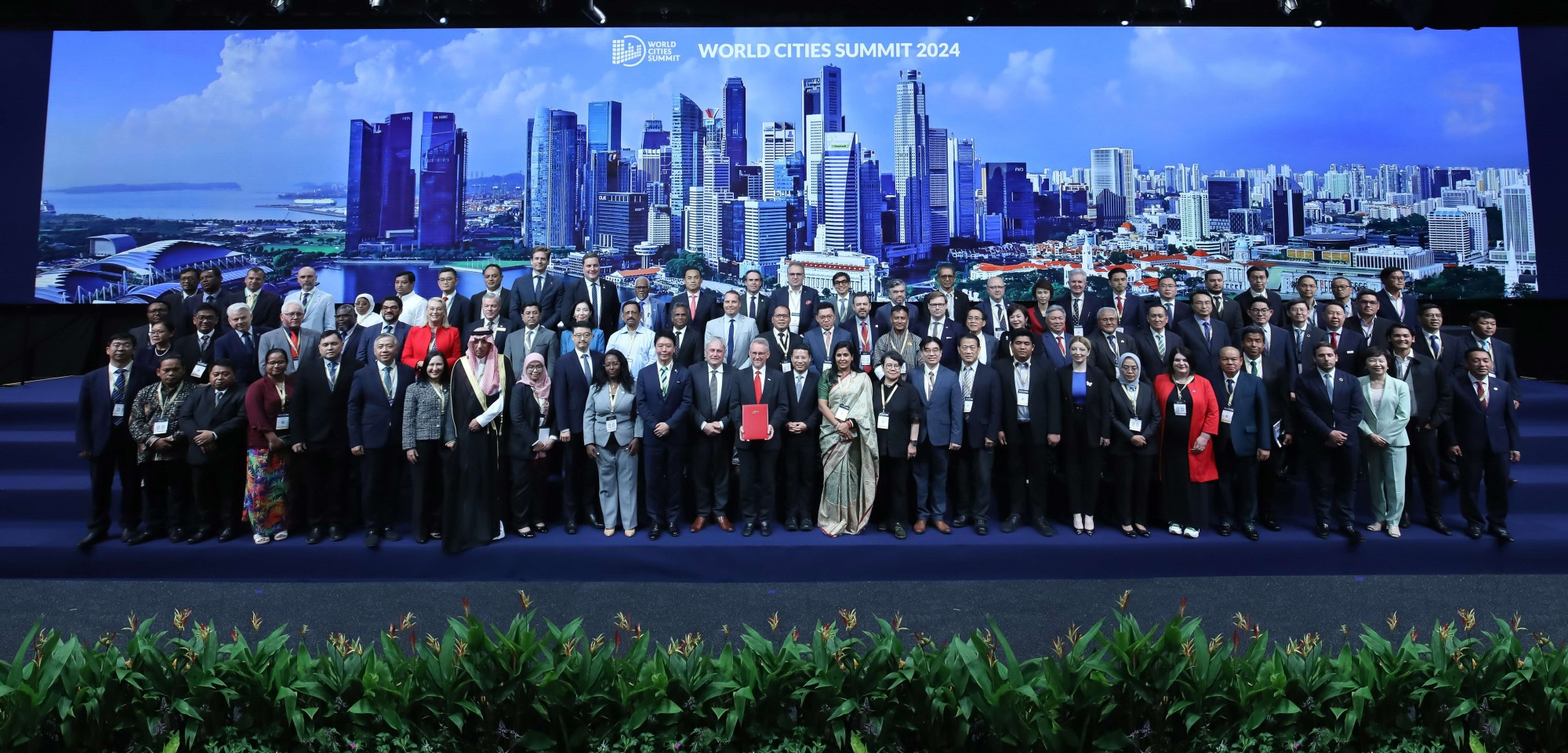
The biennial World Cities Summit (WCS) convenes government, thought leaders, businesses, and experts to address liveable and sustainable city challenges, share integrated urban solutions and forge new partnerships. This milestone 10th edition of the World Cities Summit, held in conjunction with Singapore International Water Week 2026, runs from 14 to 16 June 2026, at Suntec City Convention Centre in Singapore.
The theme for WCS 2026 is Liveable and Sustainable Cities: ACT Now! Accelerate, Collaborate, and Transform - to create more liveable, resilient, and sustainable cities. WCS 2026 celebrates how cities are transforming through bold leadership and partnerships, to actively shape a more liveable future for all.
The Summit is jointly organised by Singapore’s Centre for Liveable Cities and the Urban Redevelopment Authority.
Find out more about WCS 2026 here.
[PE1] Coastal and Flood Resilience Leaders Roundtable (by-invitation)
15 June 2026
9:00am – 2:00pm
Room 7 & 8, Level 4
ABOUT
As cities and communities worldwide face rising flood risks driven by climate change, urbanisation and infrastructure constraints, the need for collaboration has never been greater. This Roundtable brings together senior leaders from cities and agencies at the forefront of coastal and flood resilience to learn from proven practices, co-create innovative solutions, and establish actionable plans toward more prepared, adaptive and resilient communities.
Effective flood resilience demands more than just hard engineering. It requires a flexible, forward-looking approach to the designing and managing of flood protection systems that can evolve alongside changing conditions, risk profiles and community needs. At the same time, infrastructure alone cannot fully protect communities from floods. Community engagement plays a central role in building a flood resilient system, serving as both a source of critical on-the-ground knowledge and a foundation for collective action and shared responsibility.
Discussions will focus on two themes:
Session 1: Planning & Designing for Tomorrow’s Flood Resilience Today
Flood infrastructure cannot be designed solely for present-day conditions, or even a projected future state. An adaptive approach to flood infrastructure planning, design and implementation involves creating flexible systems that allow for future modifications, upgrades or operational changes as conditions shift. This may also involve phased implementation of strategies that balance on development needs, resources and changing risk profiles.
Session 2: Forging Flood Resilient Communities
Even the most sophisticated infrastructure requires community participation to achieve its full protective potential. This session will focus on building community awareness, fostering shared responsibility, and mobilising collective action, structured around three pillars:
- Awareness: Building community awareness of individual responsibilities, recognising climate change realities and challenges from urbanisation, land scarcity, and constraints in expanding traditional drainage infrastructure.
- Acceptance: Fostering community acceptance that flooding is inevitable and requires shared responsibility from all stakeholders.
- Action: Empowering communities to take action to implement flood protection measures and community resilience initiatives.
Organised by: PUB, Singapore's National Water Agency
[PE2] Urban Flooding Network Workshop
14 June 2026
9:00AM – 6:00PM
Amara Hotel, Connection 2, Level 2
ABOUT
The C40 Urban Flooding Network brings together cities active in flood resilience to exchange knowledge and collaborate; this year's workshop focuses on Nature-Based Solutions for flood management in alignment with the C40 Water Safe Cities Accelerator.Organised by: C40 Cities
[PE3] Leading Utilities of the World Workshop (By-Invitation)
15 June 2026
8:00AM – 12:30PM
Marina Barrage
Organised by: Leading Utilities of the World (LUOW)
[PE4] Towards a Society that Does Not Let Floods Become Disasters
15 June 2026
1:30PM – 5:30PM
Centre for Sustainable Development,
Newcastle Australia Institute of Higher Education (NAIHE)
230 Victoria Street, Bugis Junction Tower, Level 4 (04-29), Singapore 188024
ABOUT
Floods are becoming more frequent and more destructive around the world as climate change intensifies extreme weather events. For many cities—particularly across Asia—flooding has become one of the most urgent urban resilience challenges of our time. Yet floods do not have to become disasters. With the right combination of science, technology, governance, and community response, cities can significantly reduce the loss of lives, infrastructure damage, and economic disruption.
The Smart Cities Network (SCN) is convening an international roundtable titled "Towards a Society that Does not Let Floods Become Disasters" to bring together city leaders, policymakers, researchers, and technology innovators from Singapore, ASEAN cities, and Japan. The roundtable forms part of a government-funded research initiative in Japan that aims to advance flood prediction technologies, improve information dissemination, and strengthen municipal response systems.
The session will feature leading experts from Japan—including researchers from the University of Tokyo, Kyoto University, Nagoya University, and specialists from the Japan Aerospace Exploration Agency (JAXA)—who will share insights from cutting-edge research and pilot implementations. Their work focuses on improving flood prediction accuracy, extending early warning lead times, and developing data platforms that deliver timely, customized information to governments and communities.
[PE5] Condensations SIWW 2026
15 June 2026
4:00PM – 5:30PM
Singapore University of Technology and Design (SUTD)
Organised by: Singapore University of Technology and Design (SUTD)
[PE6] Water Tech in Action: Imagine H2O Asia Showcase and Reception
15 June 2026
5:00PM – 8:00PM
Asian Civilisation Museum
ABOUT
Building the future of water in Asia has never been more urgent. Join us in Singapore to meet the entrepreneurs who are doing it.
Water Tech in Action brings together Imagine H2O’s water startups with the utilities, investors, and industry leaders shaping Asia's growing water innovation ecosystem. Meet the founders, explore technologies up close, and build connections that count.
As climate pressures mount across the region, this year's startups are tackling water challenges that can no longer wait: water recovery and reuse in data centres and factories, water network operations, and real-time water quality monitoring.
PROGRAMME
5:00 PM: Doors Open
5.30 PM: Program
6.30 PM – 8.00 PM: Reception
Organised by: Imagine H2O
[PE7] Arup Reception
15 June 2026
6:30PM – 8:30PM
Singapore Flyer
ABOUT
Water connects cities, communities and people - and at Singapore International Water Week 2026, it brings us together.
As the conference begins, we invite you to join us for an exclusive, invitation-only networking evening in conjunction with Singapore International Water Week (SIWW) .
Join us on the opening night of SIWW for great company, fresh perspectives and conversations that flow from water to the ideas beyond it.
Expect stories, connections, drinks - and a ride on the Singapore Flyer as we welcome the week from above.
Please note that attendance is by invitation only.
We look forward to seeing you there.
Organised by: Arup
[PE8] SIWW SJ60 Special Reception
15 June 2026
6:00PM – 8:00PM
Residence of the Ambassador of Japan to Singapore
Organised by: Embassy of Japan in Singapore
[PE9] Xylem Reception
17 June 2026
7:00PM – 9:30PM
PLUME, Pan Pacific Singapore
[PE10] LUOW Inauguration
17 June 2026
9:00AM – 10:30AM
Room 8, Level 4
Organised by: Leading Utilities of the World (LUOW)
[PE11] Financing Urban Water Playbook by WBG SWC & SEAPAW
17 June 2026
11:00AM – 12:30PM
Room 2, Level 4
ABOUT
Water security is underfinanced, especially in Southeast Asia, where utilities and subnational entities struggle to access private and domestic capital due to weak creditworthiness, regulatory gaps, and a thin pipeline of scalable, bankable projects. Investors face sector-specific risks and a lack of standardized approaches to assess and structure deals. Current efforts are fragmented and bespoke, limiting replication and market uptake. Bridging the gap between private capital and water-sector needs requires a shared understanding of viable structures, clearer pathways by creditworthiness level of utilities, and actionable guidance on risk allocation and the smart use of public finance.
The Water Finance Working Group is a collaborative platform convened by the Singapore Water Center (SWC) and Southeast Asia Partnership for Adaptation through Water (SEAPAW) with the World Bank Group and a core group of 15 financial institutions. The group has developed a framework for a Practical Playbook that provides a common context for all stakeholders to assess water projects and identify fit-for-purpose instruments for financing urban water projects.
Organised by: World Bank Group (WBG) & Southeast Asia Partnership for Adaptation through Water (SEAPAW)
[PE12] From Technology to Transaction: Developing Investable Water Projects
17 June 2026
12:30PM – 2:00PM
Room 13, Level 4
Organised by: Xylem, Water Connect & Water Equity
[PE13] Financing Water-Related Climate Change Adaptation
17 June 2026
2:00PM - 3:00PM
Room 8, Level 4
ABOUT
Financing/investing in water-related adaptation has several high-potential returns, including socio-economic benefits. This workshop aims to unpack the business case for investing in water-related adaptation. Making the business case for financing water-related adaptation is premised on the evidence that water is the primary channel through which climate change impacts are felt, and at the same time, offers significant opportunities for climate change adaptation.
Water-related hazards threaten economies, communities, and ecosystems, underscoring the need for adaptation. However, water-related adaptation tends to be incremental and mostly focused on managing water-related risks, particularly in developing countries with significant adaptation needs.
Financing climate adaptation, particularly water-related adaptation, remains insufficient. The 2025 UNEP Adaptation Gap Report estimates that developing countries will require USD 310–365 billion annually by 2035, while current (2023) international public adaptation finance stands at only USD 26 billion. The New Collective Quantified Goal on climate finance (NCQG) is insufficient in meeting the adaptation finance needs of developing countries by 2035. This leaves a significant gap in mobilising finance for water-related adaptation, including those identified under the Biennial Transparency Reports.
Several structural and operational barriers, including limited revenue-generating potential, risk perception, insufficient data, a weak enabling environment, fragmented institutional mandates, and reliance on constrained public funding, constrain investments in water-related adaptation. This workshop aims to unpack the following questions:
Water-related hazards threaten economies, communities, and ecosystems, underscoring the need for adaptation. However, water-related adaptation tends to be incremental and mostly focused on managing water-related risks, particularly in developing countries with significant adaptation needs.
Financing climate adaptation, particularly water-related adaptation, remains insufficient. The 2025 UNEP Adaptation Gap Report estimates that developing countries will require USD 310–365 billion annually by 2035, while current (2023) international public adaptation finance stands at only USD 26 billion. The New Collective Quantified Goal on climate finance (NCQG) is insufficient in meeting the adaptation finance needs of developing countries by 2035. This leaves a significant gap in mobilising finance for water-related adaptation, including those identified under the Biennial Transparency Reports.
Several structural and operational barriers, including limited revenue-generating potential, risk perception, insufficient data, a weak enabling environment, fragmented institutional mandates, and reliance on constrained public funding, constrain investments in water-related adaptation. This workshop aims to unpack the following questions:
- What kind of collaborations exist, and what proves to be effective in closing gaps?
- What innovative financial instruments show the most promise for scaling investment in water-related climate adaptation?
- What changes to policy, regulatory frameworks, and institutional capacities are critical to increase the bankability and technical innovation of water-related adaptation projects and unlock private-sector participation?
PROGRAMME
2:00PM – 2:05PM: Opening & Context Setting
2:05PM – 2:20PM: Keynote Presentation
2:20PM – 2:45PM: Panel Discussion
2:45PM – 2:55PM: Audience Q&A
2:55PM – 3:00PM: Closing Remarks
Organised by: Deltares & Intergovernmental Panel on Climate Change (IPCC)
Organised by: Deltares & Intergovernmental Panel on Climate Change (IPCC)
[PE14] White Paper Presentation on Sustainable Water Certificates (SWC)
17 June 2026
2:00PM – 3:30PM
Room 7 & 9, Level 4
Organised by: Amazon Web Services (AWS)
[PE25] Urban Water Resilience as an Asset Class
17 June 2026
2:00PM – 3:30PM
Room 2, Level 4
ABOUT
An RSK–ADB partner dialogue at Singapore International Water Week
Singapore International Water Week provides a global platform uniquely positioned to address shared urban water challenges. Cities across these regions are confronting rising demand, climate stress and fiscal constraints, while investing in a growing mix of solutions including non‑revenue water reduction, desalination, water reuse, digital optimisation and nature‑based solutions. Too often, these interventions are planned and financed in isolation, limiting scale and constraining access to long‑term capital.
This partner session explores how urban water resilience can be reframed as an investable asset class, grounded in system‑level performance rather than individual projects. Led by the RSK Group, with Pegasys, WRc and Nicholas O’Dwyer, and hosted with the Asian Development Bank, the dialogue examines how cities and development partners can move from fragmented investments towards integrated resilience portfolios.
Drawing on experience across Asia, the Middle East and Africa, the discussion focuses on treating cities and their surrounding landscapes as the unit of investment. At this scale, NRW reduction improves basin‑wide water balances, digital systems enable credible monitoring and accountability, desalination and reuse diversify supply, and nature‑based solutions reduce flood and coastal risk while strengthening water quality and long‑term resilience.
The session will consider what is required to unlock new sources of capital, including blended finance, private investment and outcome‑based approaches, where verified performance such as reduced losses, improved reliability or risk reduction can support engagement from impact investors and other private actors. Particular attention will be paid to the roles of development banks, utilities and city governments in creating investable pipelines that align public objectives with private capital.
Aligned with SIWW’s focus on municipal water solutions, climate‑resilient cities, digitalisation, reuse, desalination and nature‑based solutions, this session offers a practical exchange on how regions facing similar pressures can move from projects to portfolios, and from ambition to durable, investable urban water resilience.
Organised by: RSK Group
[PE24] From Data to Decisions: Scaling Digital Resilience for Coastal and Urban Systems
17 June 2026
4:00PM – 5:30PM
Room 2, Level 4
ABOUT
As climate risks intensify, cities and communities are increasingly turning to digital technologies to strengthen preparedness, inform planning, and improve response. This session explores how digital tools can support more resilient urban and coastal systems across diverse contexts.
Examining how digitisation builds resilience across all levels from national data systems to city platforms, utility operations, and small-scale implementation, the discussion draws on experiences from Indonesia, Pakistan, Papua New Guinea, and Palau. At the national level, Indonesia highlights how integrated data platforms, predictive analytics, and early warning systems can strengthen risk-informed decision-making. At the city scale, Pakistan demonstrates how digital tools such as SCADA, GIS, and smart monitoring systems are embedded within urban service delivery and infrastructure planning to improve resilience in rapidly growing cities. At the utility level, Papua New Guinea presents how automation, integrated information systems, and digital governance enhance operational reliability and disaster preparedness. Finally, Palau offers insights from a small island context, illustrating how practical and scalable digital approaches can improve asset management and resilience despite constraints in capacity and resources.
Together, these perspectives show how digital solutions can move systems from a reactive response toward data-driven resilience across all scales.
Organised by: Asian Development Bank (ADB)
[PE16] Jacobs Reception
17 June 2026
5:30PM – 7:00PM
Dallas Café & Bar (MBS), 2 Bayfront Ave, #01-85
The Shoppes at Marina Bay Sands, Singapore 018972
ABOUT
Join Jacobs for an exclusive evening of industry engagement hosted by Present – Global Operations Patrick Hill during Singapore International Water Week 2026.
Connect with our team, clients and partners and explore how we-re addressing today's complex water challenges for a more sustainable, climate-resilient tomorrow.
We look forward to seeing you there.
Organised by: Jacobs
[PE15] The Netherlands and Southeast Asia: (Re)thinking Nature Based Solutions
17 June 2026
4:00pm – 6:00pm
Cassia Jr. 3211-3212, Level 3
ABOUT
Climate adaptation can no longer wait. South East Asia is on the frontline of climate change, facing rising sea levels that threaten low lying communities, more intense rainfall causing widespread flooding, prolonged droughts impacting food security, and an accelerating loss of biodiversity.
Nature Based Solutions (NBS) are often championed as a silver bullet for these interconnected challenges. While there are powerful examples where NBS deliver real and lasting benefits, experience shows that they work best when embedded in broader, integrated adaptation strategies. When applied in isolation, expectations can be misaligned—risking disappointment and undermining confidence in nature’s critical role in climate resilience.
This interactive workshop offers a fresh perspective on NBS—moving beyond slogans toward practical, scalable implementation. Participants will explore how NBS can effectively complement engineered solutions and support robust, multi layered climate adaptation approaches.
A key highlight is the Giant Sea Wall project in Demak, Indonesia, presented as a case study demonstrating how NBS can help shift the narrative while providing real protection for vulnerable communities. The session features an expert panel sharing best practices and lessons learned, followed by dynamic, game based breakout discussions. Delegates from the ASEAN 4 and the Philippines will bring their own case studies, engaging directly with experts from the Dutch Water House and invited guests to exchange insights, challenges, and solutions.
This interactive workshop offers a fresh perspective on NBS—moving beyond slogans toward practical, scalable implementation. Participants will explore how NBS can effectively complement engineered solutions and support robust, multi layered climate adaptation approaches.
A key highlight is the Giant Sea Wall project in Demak, Indonesia, presented as a case study demonstrating how NBS can help shift the narrative while providing real protection for vulnerable communities. The session features an expert panel sharing best practices and lessons learned, followed by dynamic, game based breakout discussions. Delegates from the ASEAN 4 and the Philippines will bring their own case studies, engaging directly with experts from the Dutch Water House and invited guests to exchange insights, challenges, and solutions.
PROGRAMME
3:30PM – 4:00PM: Registration4:00PM – 4:05PM: Opening Remarks
4:05PM – 4:20PM: Keynote Address & Introduction to Case Studies
4:20PM – 4:50PM: Expert Panel Discussion
4:50PM – 5:55PM: Breakout Session
5:55PM – 6:00PM: Closing Remarks
Organised by: Embassy of the Kingdom of the Netherlands, the Netherlands Enterprise Agency and the Singapore-Netherlands Waterhouse of Dutchcham
[PE17] Emerald Ventures Riverside Cocktail Reception
17 June 2026
6:00pm - 7:30pm
1 Empress Pl, #01-03 Asian Civilisations Museum
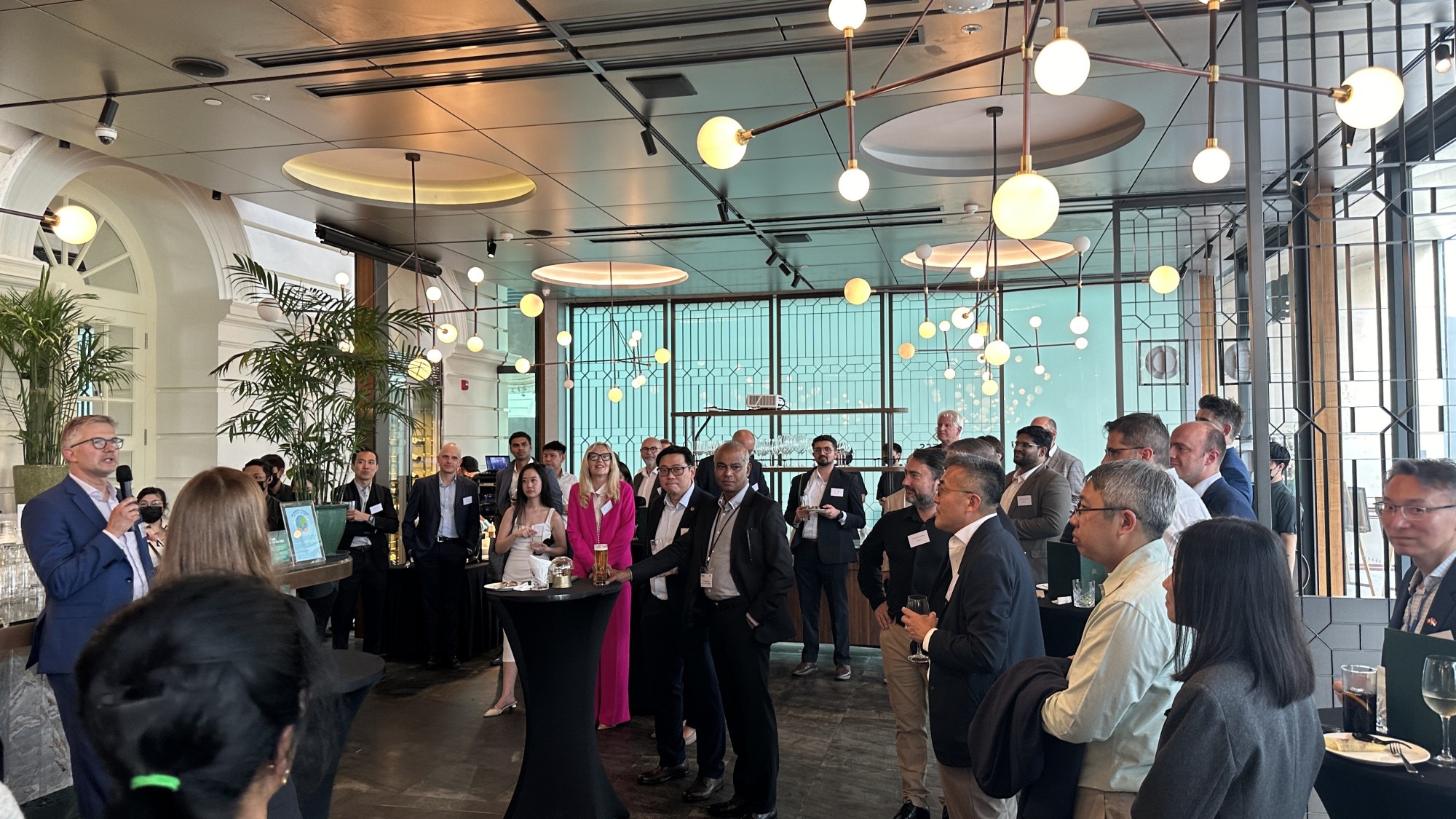
Emerald Technology Ventures is hosting its second by-invite Riverside Cocktail Reception in conjunction with Singapore International Water Week (SIWW) 2026. Building on the warm success of our inaugural reception, this year’s gathering will take place on 17 June, once again bringing together founders, investors, corporates, and public‑sector partners for an evening designed around meaningful conversations and deep connections.
Set along a scenic riverside backdrop, the reception offers a relaxed atmosphere for guests to unwind while enjoying light refreshments, and beverages. The evening is crafted to encourage informal networking, spark new collaborations, and strengthen relationships across the global water and innovation community.
As part of Emerald’s ongoing commitment to fostering strong sector networks, this reception provides a valuable opportunity to share insights, exchange ideas, and celebrate the collective progress driving the next generation of water solutions.
Organised by: Emerald Technology Ventures
[PE18] SUEZ Water Executives Networking Gala
17 June 2026
7:00PM – 10:00PM
Monti
Organised by: SUEZ
[PE19] ABC Waters Seminar: Creating a Water-Sensitive City for a Climate Resilient and Liveable Future
18 June 2026
8:30AM – 1:15PM
Room 10, Level 4
ABOUT
The ABC Waters Seminar serves as a platform for subject matter experts, developers, and professionals to share knowledge, experience, and research on blue green infrastructure as well as sustainable storm water management strategies. Awardees of the ABC Waters Certification will also be announced at this seminar, to give recognition to developers who have incorporated significant ABC Waters concept in their projects. SMS Zaqy Mohamad will be delivering the opening address as Guest-of-Honour as well as to give out the certificates to the awardees of the ABC Waters Certification.
PROGRAMME
8:30AM- 9:30AM: Registration / Networking
9:30AM - 9:40AM: Opening Address by Guest-of-Honour, Zaqy Mohamad, Senior Minister of State, Ministry of Defence & Ministry of Sustainability and the Environment, Singapore
9:40AM - 10:10AM: ABC Waters Certification Award Ceremony
10:10AM - 10:40AM: Ms Esther An, Chief Sustainability Officer, CDL
10:40AM - 11:10AM: Tea Break
11:10AM - 11:40AM: Ms Dixi Mengote-Quah, Disaster Risk Management Specialist, World Bank Tokyo DRM Hub
11:40AM - 12:10PM: Ms Joyce Tang, Chief Engineer, Civil Engineering and Development Department
12:10PM - 12:40PM: Mr Paul Hargreaves, Director, Jacobs/Water & Environment
12:40PM - 1:10PM: Q&A, Moderator: Ms Yvonne Tan, Director, DP Green Pte Ltd
1:10PM - 1:15PM: Presentation of Token of Appreciation to Speakers
Organised by: PUB, Singapore's National Water Agency & Institute of Engineers Singapore
[PE20] SWA Southeast Asia Symposium on Coastal Protection
18 June 2026
10:30AM – 6:00PM
Main Stage 1, Level 1
ABOUT
Building on the momentum of the Inaugural SWA Southeast Asia Symposium on Coastal Protection in 2025, this year’s symposium moves decisively from strategy to delivery -spotlighting implementable solutions and high-impact partnerships to accelerate coastal resilience across Southeast Asia. Attendees will gain practical insights into translating plans into projects through regional case studies, emerging technologies, and collaborative models that drive real-world impact.
PROGRAMME
10:30AM – 12:00PM: Coastal Protection Programme Introduction
- Coastal Protection Chapter updates
- Sharing by supporting government agencies
- PUB Sharing on the Code of Practice (COP) and Flood Resilience Guidebook
12:00PM – 12:45PM:
- Opening Remarks
- Senior peer, Singapore Water Association (SWA)
- Keynote address
- Zaqy Mohamad, Senior Minister of State, Ministry of Defence & Ministry of Sustainability and the Environment, Singapore
- Official launch of the Flood Resilience Guidebook
- Coastal Protection Masterclass Graduation Ceremony
12:45PM – 13:15PM: Networking Reception
13:15PM – 14:00PM: Segment 1: Panel Discussion: Southeast Asia Perspectives and Case Studies
14:00PM – 16:00PM: Segment 2: Industry Case Studies & Panel Discussion
16:00PM – 16:30PM: Segment 3: Presentations: Translating Coastal Research
16:30PM – 18:00PM: Segment 4: Coastal Protection Networking Reception
18:00PM: End of SWA Southeast Asia Symposium on Coastal Protection
Organised by: PUB, Singapore's National Water Agency & Singapore Water Association (SWA)
[PE21] Launch of the 3rd addendum to the 4th edition of the WHO Guidelines for drinking-water quality
18 June 2026
12:45pm - 1:30pm
Room 3, Level 4
ABOUT
The session will highlight how the updated guidance supports countries, regulators, utilities and partners to manage drinking-water risks and protect public health in a changing world.
Speakers:
1. Bruce Gordon, WHO
2. Dr Pang Chee Meng, PUB, Singapore’s National Water Agency
3. Jennifer De France, WHO
Expert Interventions:
1. Dr David Cunliffe, SA Health
2. Prof Gertjan Medema, KWR Water Research Institute
3. Prof Joan Bray Rose, Michigan State University
Click here to find out more.
Organised by World Health Organisation (WHO) & PUB, Singapore's National Water Agency
[PE22] From Data to Defence: Leveraging EWS for City-Wide Water Emergency Preparedness
18 June 2026
2:00PM – 3:30PM
Room 5 & 6, Level 4
ABOUT
This interactive 90-minute session will explore how city governments can effectively leverage EWS to protect their populations from water-related emergencies. It will focus on bridging the gap between technical data and effective community action, examining the challenges of risk communication, and discussing the governance structures required to foster a year-round water-aware culture of preparedness.
PROGRAMME
2:00PM – 2:05PM: Introduction of the EWS Challenge & Opening Remarks
2:05PM – 2:10PM: Getting Inspired:City Showcase 1
2:10PM – 2:30PM: Panel Discussion
2:30PM – 2:45PM: Q&A Session& Experience Sharing
2:45PM – 2:50PM: Getting Inspired: City Showcase 2
2:50PM – 3:10PM: Panel Discussion
3:10PM – 3:25PM: Q&A Session& Experience Sharing
3:25PM – 3:30PM: Summary &ClosingRemarks
Organised by: C40 Cities & Arup
[PE23] Securing Global Water Futures: Scaling Desalination and Water Reuse Through Innovation and Partnerships
18 June 2026
2:00PM – 3:30PM
Singapore Pavillion, B2
ABOUT
Co-hosted by IDRA and the Singapore Water Association, this high-level session will explore how desalination and water reuse can be scaled globally to address growing water scarcity and climate risks. Featuring participation from the Saudi Water Authority and leading private-sector innovators, the discussion will highlight policy frameworks, public-private partnerships, and next-generation technologies.Moderators:
Shannon McCarthy, IDRA Secretary General
Michael Toh, SWA, Managing Director
Confirmed Speakers:
Mr. Jon Freedman, Global Head – Policy & Stakeholders, Veralto, IDRA President
Ms. Constanze Simmermacher, Global Principals, Jacobs
Mr. Rod Naylor, GHD PRINCIPAL
Mr. Devesh Sharma, CEO, Aquatech
Mrs. Ayesha Al Alteeqi, Executive Director, MBZ Initiative/ or Mr. David Locke, Executive Director, Prize Operations, XPrize Water Scarcity
TBC Prakash Govindan, CEO, Gradiant
Organised by: International Desalination and Reuse Association (IDRA) & Singapore Water Association (SWA)
[PE31] Catalysing Product Innovation: Unlock Innovative Water Technologies – From Lab to Industry
18 June 2026
10:45AM – 12:00PM
Singapore Pavillion, Level 1
PROGRAMME
Technology Innovation at NEWRI
- Prof Wang Rong, Executive Director, NEWRI
More than a Village: Orchestrating Stakeholders for Commercial Success
- Cedric Yon, Managing Director, USS IEO
START: A National Centre of Excellence Advancing Singapore’s National Priorities
- Dr. Adil M. Dhalla, Research Fellow, NUS
Innovation For Sustainable Wastewater Treatment by Membrane Aeration-Based Technologies
- Dr. Xia Zhengang, Senior assistant director, NUS
Lab to Market: The CFES Platform For Circular Energy, Water, and Materials
- Dr. Jason Tang, Director ,CfES
Organised by: Singapore Water Association (SWA)
[PE33] Turning Data into Impact: Scaling Water Security with Asian Water Development Outlook 2025
18 June 2026 (Thursday), from 2:00 PM – 3:30 PM
Room 7

- Overview
- SIWW2026 Opening
- Ministerial Plenary
- SIWW Keynotes
- Utilities CEO Roundtable
- Lee Kuan Yew Water Prize
- Coastal and Flood Resilience Leaders Summit
- Emerging Utility Leaders Summit
- Water Leaders Summit
- Titans of Industry
- Water Convention
- TechXchange
- Industrial Water Solutions Forum
- Technical Site Visits
- Water Expo
- Networking Functions
- Partner Events